Real Fur vs Faux Fur Collars Everything You Need to Know


You touch a coat's soft collar and feel how fancy it is. Is it real fur or fake? The big difference between real and faux fur collars is where the material comes from, ethics, and the effect on nature. Real fur comes from animal skins; faux fur is made from synthetic fibers from petroleum. Soon you will learn easy tests—like checking the fur stripe and fur collars—to tell them apart. You will also think about environmental trade-offs: real fur breaks down in nature versus faux fur that does not. The guide compares warmth, how long it lasts, and cost, and covers care differences. Each choice has clear good points and bad points. By the end, you can choose with confidence.
Key Takeaways
Real fur comes from animals and breaks down on its own, while faux fur is man-made and can take 200 years to break down.
You can spot real fur by its leather backing and hairs that taper at the ends. Faux fur has a knitted backing and fibers that all look the same.
Real fur offers better warmth and lasts for decades with proper care, but faux fur is cheaper and easier to clean.
Faux fur does not cause animal cruelty but harms the environment with microplastics. Real fur raises questions about animal welfare.
Your choice depends on what matters most to you: animal welfare, sustainability, budget, or how long it lasts, so pick the right collar.
Real Fur vs Faux Fur: The Core Difference
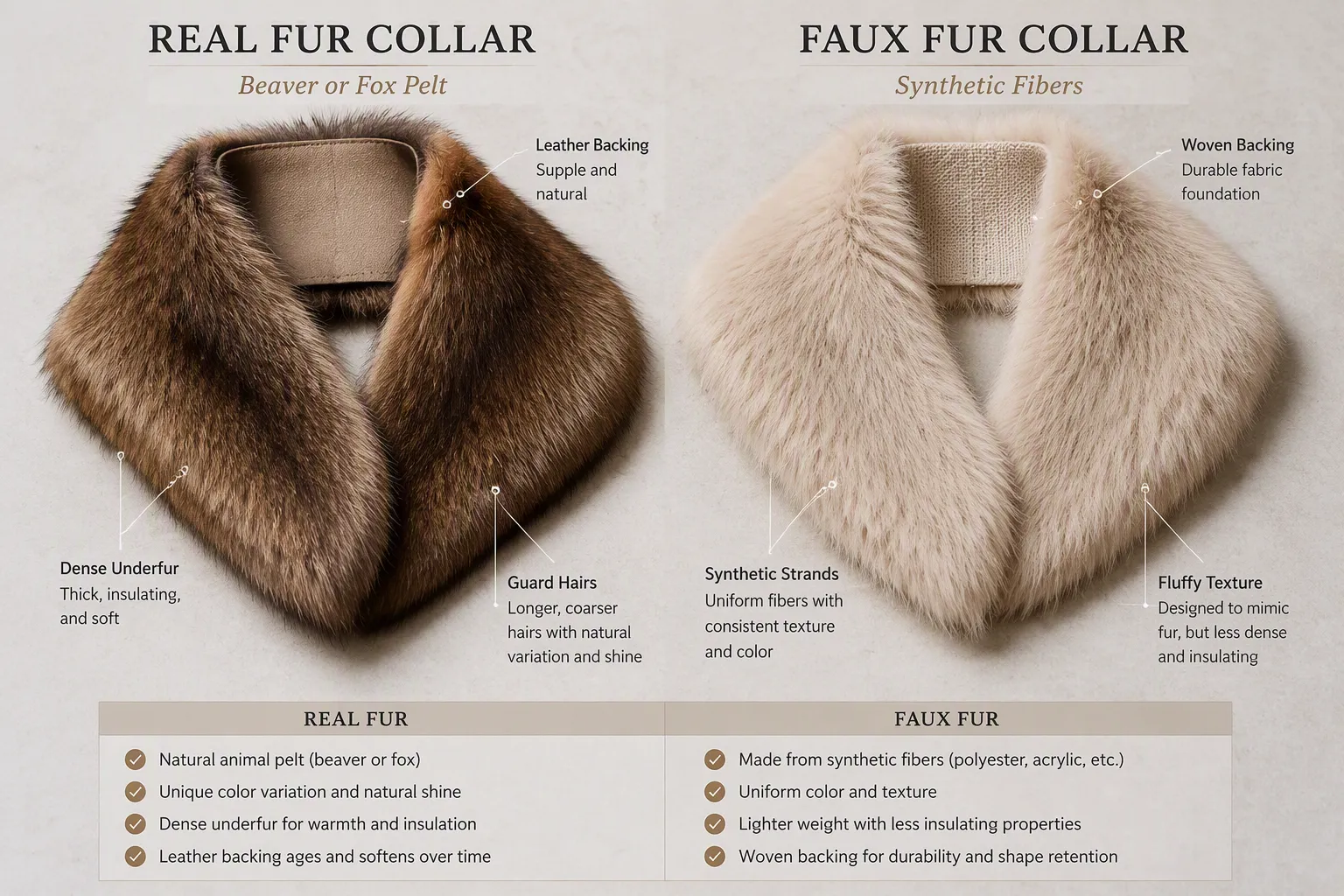
You can tell real fur from faux fur by checking what each one is made of. This difference affects everything else—warmth, cost, and impact on the environment.
What Real Fur Collars Are Made Of
Real fur collars come from animal pelts. The fur grows out of a leather backing, which gives the material its structure. Every hair has its own fiber structure with a natural shine. This natural shine is hard to copy. The fur also has a pattern called a fur stripe, which often shows up in real fur collars. A fur stripe shows natural color changes along the pelt.
Common animal sources include beaver and fox. Beaver fur has a special mix of waterproof outer guard hairs and very dense, soft underfur that provides great insulation. Common styles include structured coats, collars, and trims on luxury outerwear, often showing off the fur's natural luster and heavy weight. Fox fur comes in an amazing range of natural colors including red, silver, blue, and arctic white. Popular styles include full-length coats with bold collars, fancy stoles, and fur-trimmed accessories that show off the fur's natural movement and flow.
Real fur is a natural material. It breaks down in nature over time. This biodegradable quality gives real fur an advantage at the end of its life.
What Faux Fur Collars Are Made Of
Faux fur fabric comes from synthetic fibers like acrylic or polyester. These fibers are made from petroleum. Manufacturers design modern faux fur to copy the look of real pelts. The result is fake fur that can look soft and fluffy. However, fake fur does not have the natural fiber structure of real fur. The backing is a woven fabric, not leather.
The petroleum origin of faux fur creates a lasting problem. Faux fur does not break down in nature. These petroleum-based fabrics can take as long as 200 years to break down. Once worn out, the material is thrown into landfills instead of decomposing. Washing releases microplastic particles that pollute waterways.
Attribute | Faux Fur Reality |
|---|---|
Material composition | Synthetic polymers derived from petroleum |
Decomposition time | Up to 200 years |
End-of-life outcome | Discarded into landfills |
Biodegradability | Non-biodegradable |
Additional pollution | Microplastics released during washing |
The leather backing of real fur plays a key role in how long it lasts, because it gives the fur structural support. The breakdown process starts with the leather backing becoming brittle and dry, which makes the fur shed. Proper cleaning and conditioning every 1-2 years puts back essential oils in the leather.
This contrast matters when you try to tell the difference between real and faux fur. Real fur offers natural quality and biodegradability. Faux fur offers a cruelty-free option but carries a heavy environmental footprint. Understanding these core materials helps you judge any collar you meet.
Fur Stripe and Fur Collars: Identification Tips
Visual and Tactile Tests
You can spot real and faux fur apart with your eyes and fingers. Part the fur to see the backing. It sits on animal skin that looks like suede or leather. Faux fur sits on a knitted fabric backing. The fur stripe and fur collars often show this backing clearly. Real fur fibers have natural variations in length, color, and tapering. Faux fur tends to be more uniform, though some high-quality fake fur tries to copy these variations. The natural shine of real fur is hard to replicate. This shine comes from the unique fiber structure of each hair. Look for the fur stripe pattern along the collar. Natural color bands run along the hair shaft of real fur. Fake fur cannot copy this pattern fully.
Attribute | Real Fur | Faux Fur |
|---|---|---|
Fiber ends | Tapered, pointy ends | Uniform, blunt-cut fibers |
Fiber texture | Distinctive natural feel and softness | Synthetic fibers (acrylic, polyester) |
Backing material | Leather base (animal skin) | Knitted mesh backing |
This table shows how the two materials differ. Another way to know how to tell real fur from fake is by checking the label. Reputable brands state whether the garment contains real fur or synthetic fibers. Touch the fibers. It feels softer and more natural. Faux fur fabric can feel stiff or overly soft in an artificial way.
The Burn Test and Price Clues
A burn test can confirm the material. This test shows you how to tell the difference between real and faux fur. Snip a few hairs from a hidden area. Hold them with tweezers and briefly expose them to a flame. Real fur smells like burning human hair and crumbles into ash. This shows a protein-based material. Fake fur melts and smells like plastic. It can leave a hard bead behind. This shows synthetic chemical components.
Material | Burn odor | Melting behavior | Residue |
|---|---|---|---|
Real fur | Smells like burning hair | Does not melt like plastic | Ash crumbles easily |
Faux fur | Smells like plastic | Often melts | Hard, plastic-like bead |
Price gives you another clue. Real fur costs significantly more because it is a luxury material. The price gap reflects the material source and craftsmanship, making it a long-term purchase. Knowing how to tell the difference through touch, sight, smell, and price helps you make the right choice.
Faux Fur vs Real Fur: Ethics and Environment
Animal Welfare and Industry Practices
The right and wrong of faux fur vs real fur affects what many people buy. Real fur collars come from animal skins. Humane World for Animals says tens of millions of animals—like mink, foxes, and raccoon dogs—are killed each year for their fur. These animals live in dirty, packed cages. Workers use cruel killing methods or catch them in painful metal traps. Some animals get no food or shelter before they are drowned or crushed. Profit and style drive these acts, not need.
Criterion | High-End Faux Fur | Real Fur |
|---|---|---|
Animal welfare | No animals hurt or used | Needs animal skins |
Fur farm rules differ a lot. The EU Council Directive says animals must be kept without harm to their health or well-being. The Council of Europe Recommendations from 1999 are not enforced. The WelFur Program, started in 2017, is a voluntary check on feeding, housing, health, and behavior. Inspectors look at nest box size, straw insulation, body condition, injuries, and signs of stress. A full check takes about 6 hours for a 120-cage sample across 22 items. Some countries ban fur farms: the UK, Austria, Slovenia, Croatia, Bosnia, and the Netherlands.
"Since 'best current practice' involves the use of a farming system with low welfare potential, even the farms that score highest on the WelFur protocols will be providing a standard of welfare that most people would not consider acceptable." — Respect for Animals report
Sustainability and Biodegradability
You have to choose carefully when looking at environmental harm. Real fur breaks down in nature. But chemical tanning can use bad substances. Faux fur does not break down and uses fossil fuels. These oil-based fabrics can take up to 200 years to decay. Washing sends microplastics into water. National bans in several countries show growing worry about animal welfare. Lifecycle studies argue about which choice does less total harm. No perfect green option exists. You must balance animal suffering against oil use. Some brands now try to be sustainable by using recycled materials in fake fur. Others promote used real fur to avoid new production. The choice comes down to what you value. Knowing how to tell the difference helps you pick a collar that fits your beliefs.
Real Fur vs Faux Fur: Warmth and Durability
Insulation, Breathability, and Longevity
Real fur holds air inside its thick underfur layer. This natural setup keeps you warmer on cold days. The fibers also let moisture out, so you stay warm and dry. A real fur collar can last many years if you take care of it. The leather backing keeps the fibers in place year after year.
Faux fur can keep you warm too, but it does not breathe as well. Synthetic fibers trap heat, but they also trap moisture on your skin. Over time, faux fur tends to mat and lose its shape. The fibers flatten and cannot bounce back like natural hair. This makes the collar wear out sooner. You will see the difference after just a few seasons.
Care and Maintenance Differences
Real fur needs a professional's help. Bring your collar to a fur specialist at least once a year, ideally after the wearing season. A good furrier uses methods that safely clean both the fur and the leather backing. Do not dry clean, wash, or use home cleaning products. These remove the natural oils and harm the leather. For storage, use a strong padded hanger and a cloth bag that lets air in. Keep the collar away from direct heat and sunlight.
Faux fur is easier to clean at home. You can machine wash many faux collars on a gentle cycle. But this ease comes with a downside. Washing speeds up wear, and the fibers break down faster each time. Fake fur also releases microplastics into the water. So the simpler care for faux hides a trade-off in how long it lasts. Knowing the care differences helps you protect your investment.
The Difference in Cost: Short vs Long Term
Upfront Price Comparison
You see a big difference in price when you first shop. Real fur demands a high upfront cost. The price reflects the animal pelt itself and the craftsmanship needed to turn it into a collar. A real fur collar costs far more than a faux one. This initial cost acts as a barrier for many buyers. Faux fur offers a much lower entry point. Synthetic fibers and mass production keep its cost low. You can buy a faux fur collar for a fraction of the cost. This price gap makes faux fur accessible to more people. However, the upfront number does not tell the whole story.
The cost gap starts with the materials. Real fur requires animal pelts. Each pelt is unique. Workers treat the leather backing with care. This process takes time and skill. Faux fur uses petroleum-based fibers. Machines produce these fibers quickly. The fabric backing costs less than leather. You pay for these production costs at the register.
Investment and Replacement Costs
The long-term cost changes the picture. A real fur collar lasts decades with proper care. You might pass it down to the next generation. Professional cleaning every year adds cost, but the collar stays intact. You do not need to buy a new collar each season. This makes real fur a true investment.
Synthetic fur has a shorter life. The fibers mat and lose their shape. The collar looks worn after a few seasons. You must replace it more often. The price of faux fur is low each time. But over ten years, you might need to replace a synthetic collar multiple times. Those costs add up. The total can match or exceed the price of one real fur collar. The difference becomes clear when you consider the entire period you own the coat. You also deal with the waste of discarded synthetic fur. Natural fur, if cared for, stays useful for a much longer time.
Making Your Choice: Real vs Faux Fur
Fur Stripe and Fur Collars: Pros of Real Fur
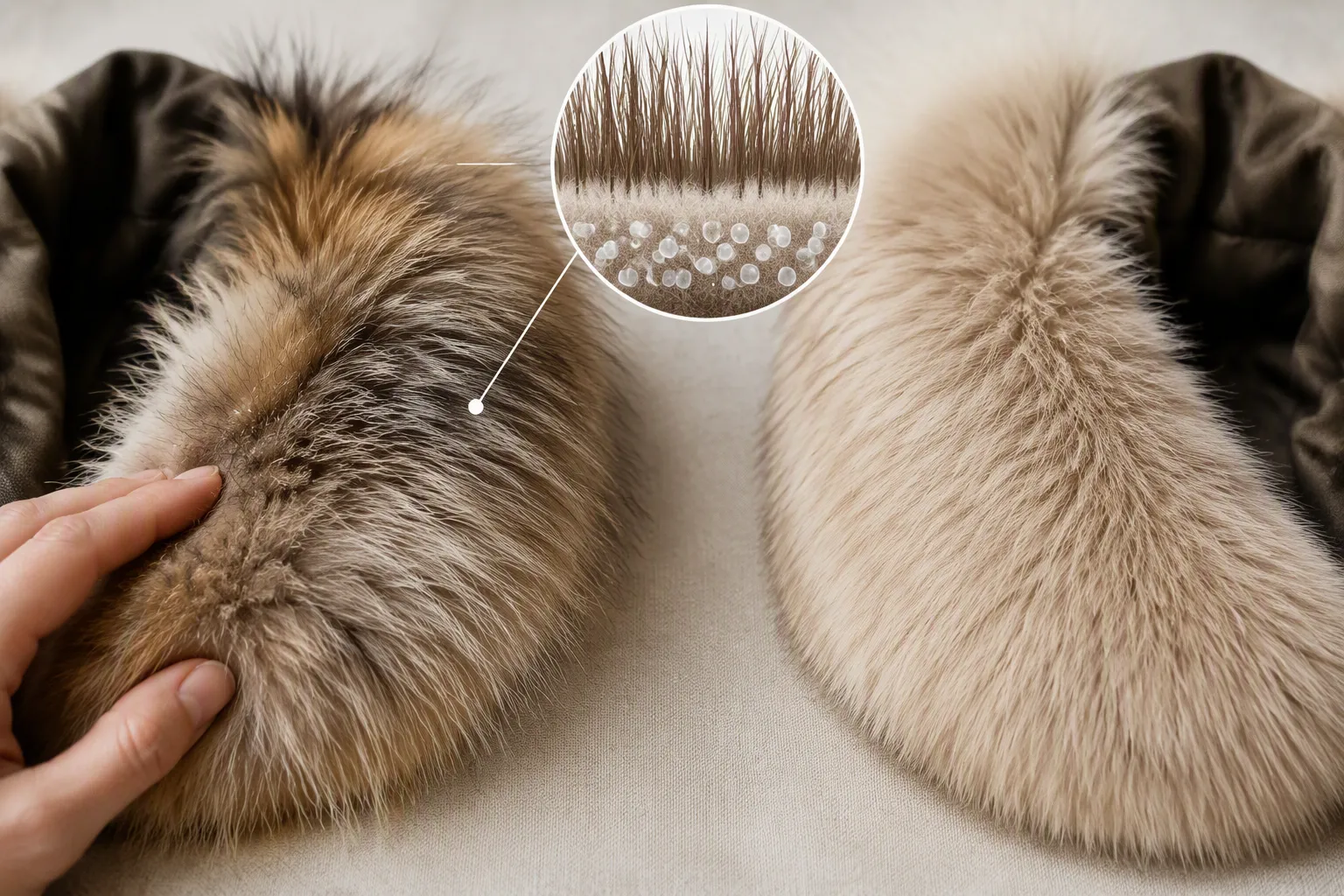
When you look at a fur stripe and fur collars, you can see what makes real fur special. Real fur gives you warmth that faux options cannot match. Its two-layer structure gives you two benefits. Long guard hairs keep out moisture and rubbing. Short underfur traps air and creates a layer that holds in heat. This design helps animals survive extreme cold. Rabbit fur gives great warmth while staying light and breathable. You get comfortable warmth without heavy bulk. Fox fur is thick and full, which makes it great for extreme cold. This mix gives you comfort in harsh weather.
The way it looks adds even more appeal. Fur collars are linked with luxury and elegance. The soft feel and rich look can make even a simple coat look better. Real fur has a natural depth of color that synthetic materials cannot copy. It reflects light and creates subtle shades of color. This natural variation comes from the fur stripe pattern. Each hair shows subtle color bands along its length. This makes a coat more visually interesting and refined compared to fake fur. Skilled craftsmanship adds to how it looks.
Texture plays a central role in this new luxury movement. Fabrics like fur bring softness and dimension to simple looks.
Different fur types create different effects. Mink offers a soft, shiny texture. Fox fur provides a long, glossy look. Rabbit fur is soft and cozy. Coyote fur gives a more rugged appearance. The plushness of real fur makes wearing a coat feel better to the touch.
Faux Fur Collars: The Ethical Alternative
Faux fur collars offer different advantages. Modern faux fur looks almost the same as real fur in look, drape, and softness. Manufacturers often need touch to confirm it is fake fur. The quality of faux fur fabric has improved a lot. Synthetic fibers can create a plush texture that mimics real fur like chinchilla. This innovation creates realism in both feel and appearance. Blending acrylic with other fibers produces natural-looking patterns. Fake fur cannot replicate the natural fiber structure, but high-end versions come close.
The ethical stance of this material is clear. Avoiding fur prevents animal suffering and exploitation. This reinforces why faux fur collars are the ethical choice. You can support brands that ban fur.
"Fur is a luxury item. Fur is not essential to human health or well-being. Causing suffering for fur is morally beyond the pale." —Andrew Linzey
Vegan faux fur coats provide luxurious texture and timeless style without harming any animal. They celebrate sustainability. Cruelty-free outerwear becomes the new standard for conscious style.
The difference between the two options comes down to your values. One key difference is longevity versus ethics. Another important difference is natural materials versus synthetic innovation. You must decide which factors matter most to you.
You now hold the facts. Real fur keeps you warmer, lasts for decades, and breaks down in nature. Yet it comes from animals, and that raises real ethical questions. Faux fur harms no animals and costs far less at the register. However, it comes from petroleum, sheds microplastics, and wears out in a few seasons. Your values decide the winner. Do you care most about animal welfare, sustainability, budget, or longevity? Each answer points to a different collar. Now that you know the facts, which collar will you choose for your next coat? Let us know in the comments.
FAQ
How can you tell real fur from faux fur quickly?
Part the hairs and check the backing. Real fur grows from a leather base, while faux fur sits on a knitted fabric. Real hairs taper and vary in color. Synthetic fibers look uniform and blunt-cut. A quick touch and look usually settles it.
Does the burn test really work on fur collars?
Yes, it works well. Snip a few hidden hairs and hold them near a flame. Real fur smells like burning hair and crumbles into ash. Faux fur melts and smells like plastic, leaving a hard bead behind.
Which collar keeps you warmer in winter?
Real fur wins on warmth. Its dense underfur traps air, and the guard hairs block moisture. Faux fur traps heat too, but it does not breathe well. You may feel damp and clammy after wearing it for a while.
Can you wash a faux fur collar at home?
You can machine wash many faux collars on a gentle cycle. This convenience comes with a cost. Each wash breaks down the fibers faster and releases microplastics into the water. Real fur needs a professional furrier instead.
Why does real fur cost so much more?
Real fur comes from animal pelts, and each one is unique. Skilled workers treat the leather backing by hand. Faux fur uses petroleum-based fibers that machines produce quickly. That production gap explains the large price difference at the register.
See Also
Comparing Real Fur Pompoms Against Faux Fur Options For You
Selecting Between Faux Fur And Sherpa Fabric For Your Requirements
Guide To Picking Top Quality 100 Percent Polyester Faux Sherpa
Key Guide For Sourcing Faux Lynx Fur Coats From China
Finding Faux Pony Fur Fabric Online And Tips For Quality Selection
