Real Fur Pompoms vs Faux Fur: Which Is Better?

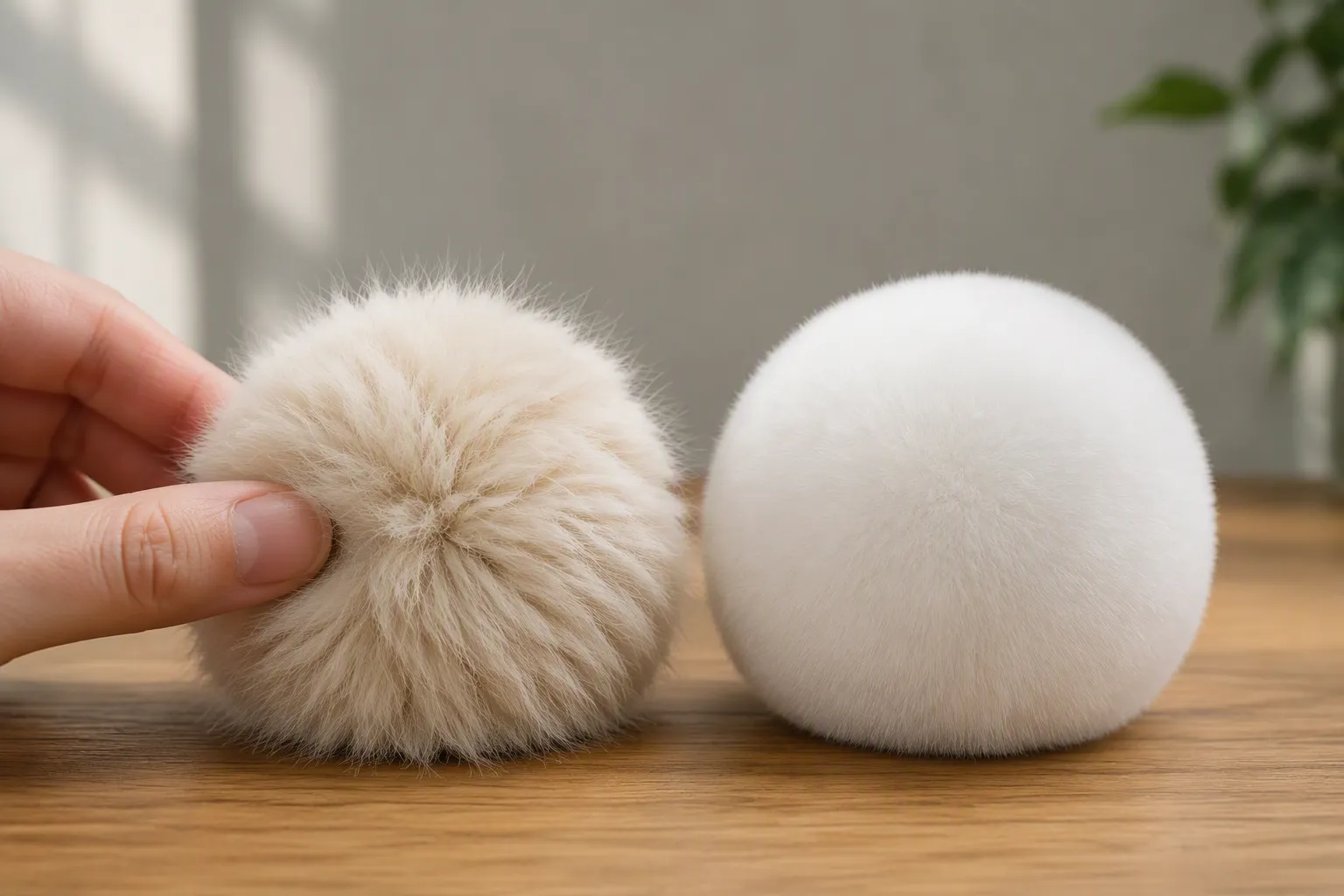
You face a real choice when picking fur pompoms for your winter gear. The faux fur vs real fur debate touches ethics, environment, and style. Most shoppers choose faux for its cruelty-free appeal and design options. Yet real fur often surprises you with better warmth and lower prices on small items like pompoms. This pros and cons guide helps you weigh both sides fairly. You must think about the environmental footprint, durability, and feel of each material. The faux fur debate goes beyond simple preference into personal values. Your fashion choices show what matters most to you. Look at the pros and cons carefully before deciding. For quality options, check https://www.fur-factory.com/fur-pompoms-product/ to see real fur choices firsthand.
Key Takeaways
Real fur pompoms cost less than high-quality faux fur for small accessories.
Faux fur gives you a cruelty-free choice that does not harm animals.
Real fur keeps you warmer and lasts longer with proper care.
Real fur breaks down naturally. Faux fur creates microplastic pollution.
Ethical Considerations for Fur Pompoms
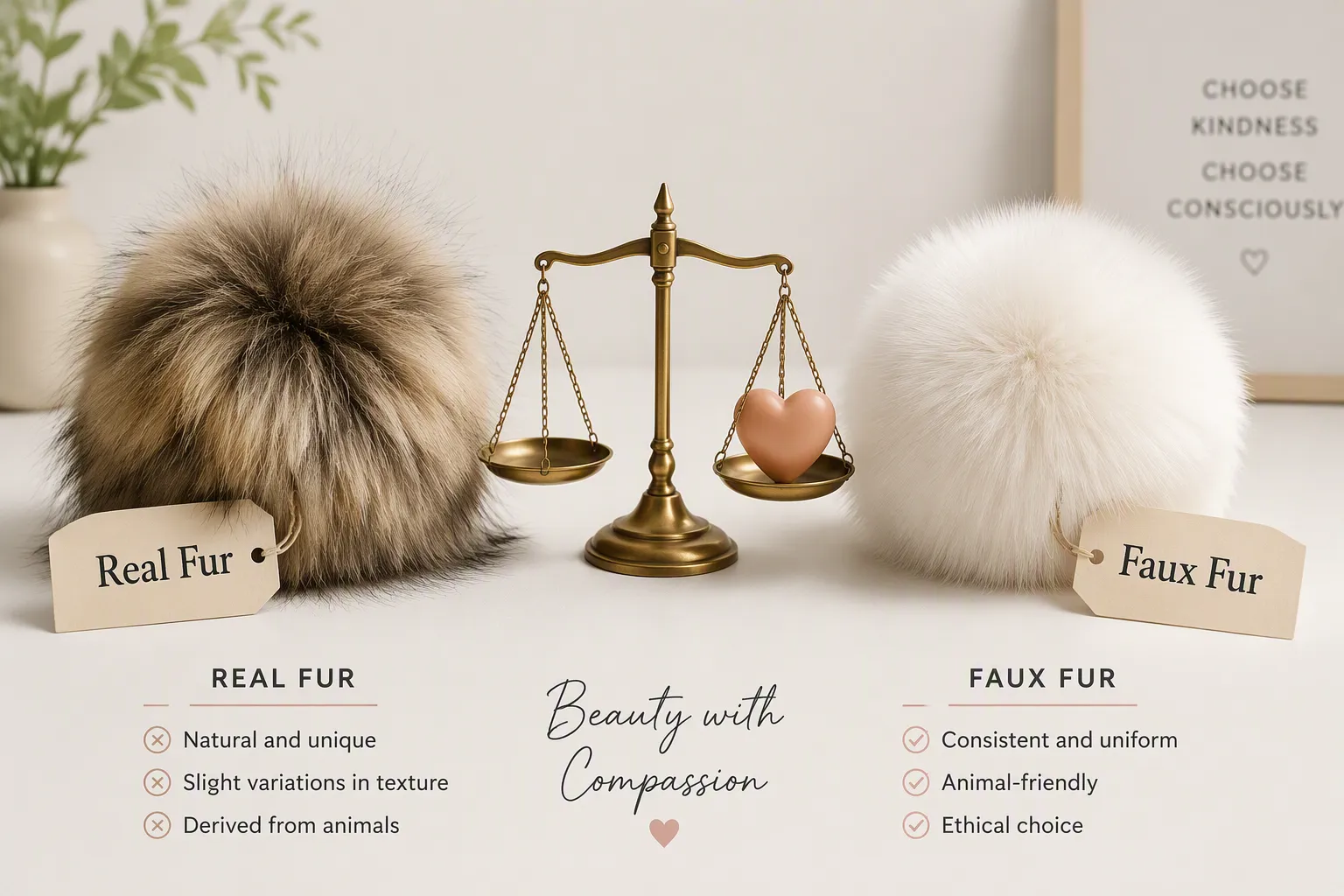
The ethical debate about fur pompoms focuses on one main question: does your accessory make an animal suffer? This debate connects to your personal values about animal care, the environment, and what you buy. You need to compare the known facts of fur production with the good points of cruelty-free options.
The Moral Case for Synthetic Fur
Animal rights groups make a strong argument for fake fur. Secret investigations have shown terrible conditions on fur farms. Animals spend their whole lives in wire cages. This causes them to have anxiety and hurt themselves. Some chew off their own limbs. Others keep harming themselves on the cage bars. Ways of killing include beating, choking, gassing, breaking necks, or shocking their genitals. Investigators have seen animals get skinned while still alive. Some survivors gasped for air after being thrown onto piles of skinned bodies.
The amount of suffering is huge. Tens of millions of animals are raised and killed each year for fur. Up to half of all farmed fur animals are killed for trim and pompoms. In 2018, almost 3 million animals were trapped in North America alone. This includes 647,000 raccoons and 363,000 coyotes. Traps cause a lot of pain and suffering. Animals often stay trapped for days without food, water, or shelter. Some hurt themselves trying to get free. Trappers often stomp or beat them to death.
In 2016, PETA said that a big Wisconsin fur farm kept mink and foxes in dirty cages. The farm scared the animals by spraying them with a loud pressure washer. Unlike animals raised for food, fur-farmed animals in the US are not protected by federal laws like the Humane Methods of Slaughter Act.
This lack of legal protection makes fake fur a good ethical choice. The fashion world is moving toward fur-free options. This shows that buyers are more aware of these cruel practices. Choosing fake fur means you do not directly cause animal suffering.
The Case for Responsibly Sourced Natural Fur
Supporters of real fur say that responsible sourcing changes things. Regulated trapping follows the North American Model of Wildlife Conservation's idea of 'wise use without waste.' For animals like coyotes or skunks, where people don't want the meat, managing them is still needed for the environment. Instead of killing extra animals and wasting them, their fur provides natural warmth.
Wild animals caught by licensed trappers have many uses. Beaver meat feeds many trappers. Scent glands are used for different things. Tail leather becomes products. Skulls and bones go to schools or art markets. Almost every part of the animal is used. This is different from animals killed outside regulated seasons or hit by cars.
Studies that other scientists check support the ethics of regulated trapping. Well-trained conservation officers enforce rules with tough penalties. These include fines, jail time, and losing trapping rights. Most states require trappers to take certified courses. These courses cover laws, gear use, animal biology, and ethical methods. Since the mid-1990s, wildlife agencies have spent over $40 million on research. This research looks at how humane traps are and creates Best Management Practices.
The Wildlife Society says that well-regulated trapping has benefits. These include fewer conflicts between people and wildlife, control of disease outbreaks, management of invasive species, and more knowledge about nature. Programs like FurMark check welfare standards, environmental practices, and supply chain openness by a third party.
In the end, the ethical choice depends on your values. Fake fur gives you a cruelty-free option for sure. Real fur from regulated sources helps conservation and uses animals with respect. Your choice shows what is most important to you.
Environmental Impact: Faux Fur vs Real Fur
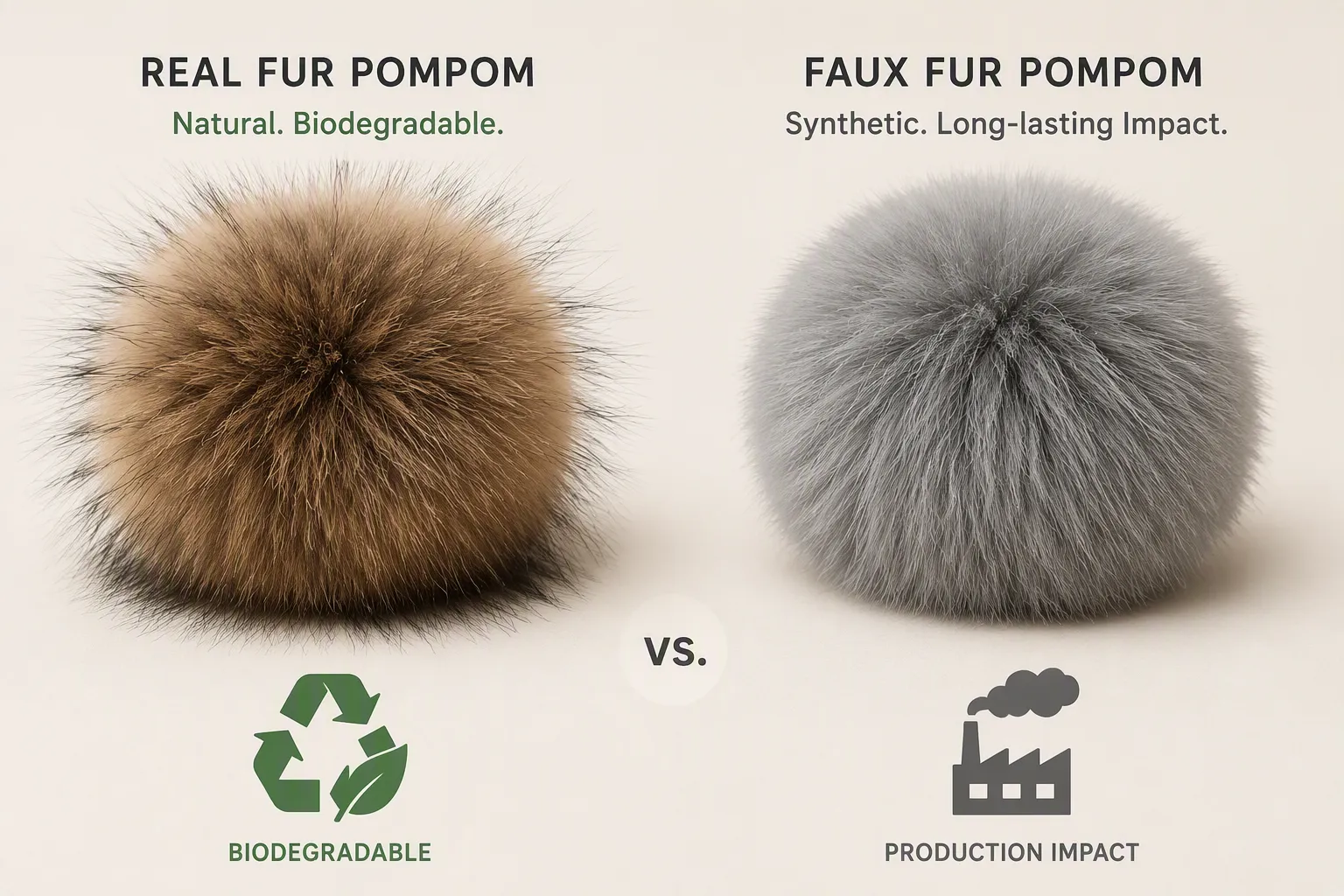
When you compare how fur pompoms affect the environment, you must look past the making stage. You need to think about the whole life of each material. This includes how makers create the product, how long it lasts, and what happens when you toss it. The sustainability picture changes a lot depending on which stage you study.
Biodegradability of Natural Fur
Real fur comes from animals, so it breaks down naturally in the earth. When you throw away a real fur pompom, tiny organisms break it apart over time. The material decays without putting toxic chemicals into the soil. This natural process is very different from synthetic options. A real fur item can help the environment instead of hurting it.
The ability of natural fur to break down gives it a clear plus at the end of its life. You do not need special places to get rid of it the right way. The material simply decays, finishing a cycle that started with the animal itself. This fits with sustainability ideas that value materials returning to nature without leaving harmful leftovers.
However, you should look at the whole picture. The making stage of real fur has big environmental costs. A checked study by CE Delft in 2013 compared natural mink fur coats with faux fur coats. The study looked at every step, from feed production and animal raising to transport and burning at the end. The results shocked many buyers:
Natural fur products hurt the environment more than faux fur options in every measured area.
The climate change effect of a natural mink fur coat is 3 to 10 times worse than that of a faux fur coat.
This comparison used 1 kg of fur versus 1 kg of faux fur and included many lifetime and care scenarios.
Natural fur always does worse for the environment, with the smallest difference being a factor of 3.
These findings show that the environmental mark of real fur goes far beyond disposal. Raising animals needs feed, water, land, and energy. The waste from fur farms also adds to pollution. You must weigh the break-down benefit against these making costs.
The Microplastic Problem of Synthetics
Faux fur brings a different set of environmental issues. Most synthetic fur comes from petroleum-based materials. These plastics do not decay naturally in the environment. Instead, they split into tiny pieces called microplastics. These pieces enter waterways, soil, and even the food chain. The pollution from synthetic fur lasts for hundreds of years.
When you wash a faux fur pompom, tiny plastic fibers shed and move to wastewater treatment plants. Many of these fibers pass through filters and end up in rivers and oceans. Sea animals eat these pieces, and the toxins move up the food chain. This environmental effect continues long after you stop using the product.
The disposal problem makes the issue worse. Synthetic fur does not break down in landfills. It stays there forever, slowly releasing microplastics into the nearby soil and groundwater. Some new options now address this worry:
Some new materials are commercially compostable, breaking down into natural elements without releasing toxic chemicals.
Synthetics generally come from fossil fuels, cause microplastic waste, and do not break down.
Biodegradable options offer a fix for material end-of-life disposal problems.
These plant-based choices give a middle path for eco-aware shoppers. They provide the look and feel of faux fur without the lasting pollution. However, they stay less common than traditional synthetic options.
The environmental comparison between real fur and faux fur avoids simple answers. Real fur offers natural break-down but carries heavy making costs. Faux fur avoids animal welfare issues but creates lasting plastic pollution. Your choice depends on which environmental factors matter most to you. The sustainability of your fur pompoms depends on the whole life cycle, not just one stage.
Warmth and Performance: Real Fur vs Faux Fur
When picking between fur pompoms, warmth is important. The two materials work differently. Real fur gives natural insulation that fake fur finds hard to match. But fake fur has gotten much better. Today's makers create options that keep you warm in most weather.
Insulation Qualities of Animal Fur
Animal fur uses a smart design. It has a two-layer hair system. Guard hairs form a protective outer layer. Dense underfur traps air pockets near your skin. This two-layer setup cuts down heat loss. It creates a steady insulating air layer around your body.
The fur's density makes a big difference. Beavers have a high density of hairs per square centimeter. Arctic foxes also have a high density of hairs. This high density traps large amounts of still air between hairs. That still air acts as a good thermal barrier.
Polar bear fur has a special structure that enhances insulation. This structure helps cut down heat loss and improves heat control in extreme conditions.
Hollow or medullated hairs in many animals also improve insulation.
Warmth Performance of Synthetics
Fake fur uses different technology to get warmth. Makers pick certain synthetic fibers. Acrylic fibers copy the warmth of animal fur. They give great insulation for winter clothes. You get insulation that works well for most daily tasks.
Engineers design hair length, thickness, and weight carefully. These factors copy the insulation of animal fur. The blend ratio of fibers in both the backing cloth and the hairs affects heat performance. Post-production steps like shaving and brushing further improve warmth and feel.
You can find fake fur that gives reliable warmth in cold weather. The material traps air between fibers just like real fur does. It gives a good option for most climates. However, it does not match the breathability of animal fur. Real fur lets moisture escape while keeping heat. Fake fur may trap more moisture against your skin.
For your winter fashion choices, you have two good options. Real fur gives you great insulation with natural breathability. Fake fur offers similar warmth with more design choices. Both can keep you cozy during cold months.
Cost and Durability: Comparing Faux Fur and Real Fur
Affordability Comparison
You might think real fur costs more than fake fur. For small items like fur pompoms, the opposite is often true. A real fur pompom can cost less than a good fake fur one. This shocks many shoppers. The reason is how each is made. Real fur has long-standing supply chains. Fake fur needs complex manufacturing. The best fake furs use advanced technology. That technology raises the price. When you buy a luxury fake fur piece, you pay for the fiber engineering. A real item from regulated sources often has a lower price. This makes it a natural choice for accent pieces. You get natural material without the extra cost. The price difference grows with the fake fur quality. Cheap fake fur costs less upfront. But it may not last as long. High-quality fake fur costs more at first. It offers better durability but still falls short of real fur's lifespan.
Longevity of Animal Fur
Material | Lifespan & Wear Resistance | Key Factor |
|---|---|---|
Real fur | Lasts many years with proper care | Natural oils keep it soft and supple, increasing resistance to wear and tear |
Faux fur | May not last as long, but new technology gives more durable options | Quality of the synthetic fur decides how long it lasts |
Friction from daily activities causes the worst wear on fake fur. Leaning on elbows or rubbing bag straps leads to damage that cannot be fixed. Heat sources like dryers burn hair tips. This makes the fur lose its softness and look bad. You can make real fur last longer with simple care. Have it cleaned by a fur expert every year. Never use a regular dry cleaner. This restores oils and extends life. Use a soft brush to remove dirt. Store fur in professional vaults with controlled humidity and temperature. Avoid home storage or cedar closets. These dry out the leather. For fake fur, do not wear it while driving or sitting. Always remove it when seated. This stops most wear. Never use a dryer. Use professional dry cleaning or cold air drying. The right care makes a big difference for both materials.
Aesthetics: Spotting Natural Fur vs Faux Fur
Your eyes and fingers can reveal the truth about a pompom. You do not need a lab test to spot the difference. You just need to know what to look for. The visual cues separate genuine materials from synthetic ones quickly.
Visual and Tactile Differences
Real fur shows natural irregularities that machines cannot fully copy. Individual hairs taper to fine points at the tips. They vary in length and thickness across the pelt. Color shifts gradually from root to tip. A lighter undercoat sits beneath darker guard hairs. This layering creates depth and dimension. Faux fur, even high-quality versions, tends toward uniformity. Synthetic fibers often have blunt, cut ends. The color stays consistent without natural gradations.
Visual Cue | Real Fur | Faux Fur |
|---|---|---|
Tanned leather-like skin (thin suede) | Woven fabric (mesh or knitted) | |
Tapered, pointed, natural variation | Blunt, uniform ends, cut consistently | |
Natural gradations, multi-shade from root to tip | Uniform coloration, artificial patterns |
Touch tells you more. Real fur feels softer and more pliable because natural oils condition the fibers. The irregular surface structure of animal hair creates a rich tactile experience. Synthetic fibers feel slightly coarse by comparison. They lack those natural oils. The uniform structure of faux fur produces a less engaging sensation against your skin. Synthetic materials also trap moisture, creating a clammy feeling over time.
Practical Identification Tips
You can use several reliable methods to identify what you hold. The base examination works first. Part the fur and inspect the backing. Genuine fur protrudes from skin or leather. Faux fur has a mesh or threaded fabric backing. The difference becomes obvious immediately.
The tip test confirms your finding. Pull out a single hair. Examine the end closely. Real animal hairs taper to a fine point. Faux fur fibers end bluntly without tapering. This simple check takes seconds.
The burn test provides the most definitive answer. Remove a few hairs with tweezers. Hold them over a nonflammable surface. Light them carefully. Burning animal hair smells like burning human hair. Fake fur made from acrylic or polyester smells like melting plastic. The odor difference is unmistakable.
Real Fur | Faux Fur | |
|---|---|---|
Base/Backing | Natural skin or leather backing, pliable | Fabric backing, rougher and less pliable |
Hair Ends | Tapers to a fine point | Blunt or even pointed ends |
Texture & Movement | Luxurious feel, natural glow, fluid movement | Synthetic feel, less natural movement |
Color | Natural variations in shading | Consistent, uniform shade |
Knowing how to tell real fur from fake protects your purchase. This knowledge matters for your fashion choices. You can verify quality before you pay. You avoid disappointment and wasted money. You also gain confidence in your buying decisions.
The faux fur choice depends on your priorities. Faux fur is best for ethics. You avoid making animals suffer. The faux fur vs real fur matchup shows real fur is better for warmth and lasting long. Real fur also breaks down naturally. For small pompoms, real fur often costs less than good faux fur.
Pick faux fur if animal welfare is most important. You get a sustainable option with new materials. Pick real fur if you want something that lasts and is natural. You lower your impact on the environment. Faux fur also gives you more style choices.
Your fashion choices show what you care about. The right choice depends on what matters to you. Both types keep you warm in cold weather. Both fill different needs. Knowing the facts helps you decide. Sustainability means different things to different people. Your values guide the best choice. Faux fur stays the animal-friendly option. The real fur vs faux fur debate has no clear winner. Each material gives its own warmth.
FAQ
How can you tell if a pompom is real fur or faux?
Part the hairs and examine the base. Real fur attaches to leather or skin. Faux fur has a woven fabric backing. Pull one hair and check the tip. Real fur tapers to a point. Faux fibers end bluntly.
Does real fur shed more than faux fur?
Real fur sheds minimally when you care for it properly. Faux fur can shed more, especially with friction from bags or coats. Both materials shed some hairs during normal use. Proper storage extends the life of either option.
Can you wash fur pompoms at home?
You should avoid washing either material at home. Water damages the leather base of real fur. Faux fur may mat or lose its softness. Professional cleaning works best for both types. Always check the care label before attempting any cleaning method.
Which fur type offers better value for small accessories?
For small items like pompoms, real fur often costs less than high-quality faux fur. Real fur also lasts longer with proper care. Faux fur provides an affordable cruelty-free alternative. Your budget and values determine the best choice for your needs.
See Also
Selecting The Ideal Long Pile Faux Fox Fur For Your Needs
Picking The Top Quality Polyester Faux Sherpa Fur Material
Comparing Faux Astrakhan Coats With Genuine Fur In The Year 2026
Five Methods For Selecting Distinctive Long Pile Faux Raccoon Fur
Understanding Synthetic Astrakhan Fur And Its Comparison To Authentic Fur
