Choosing the Right Fur Rug Size for Your Living Space

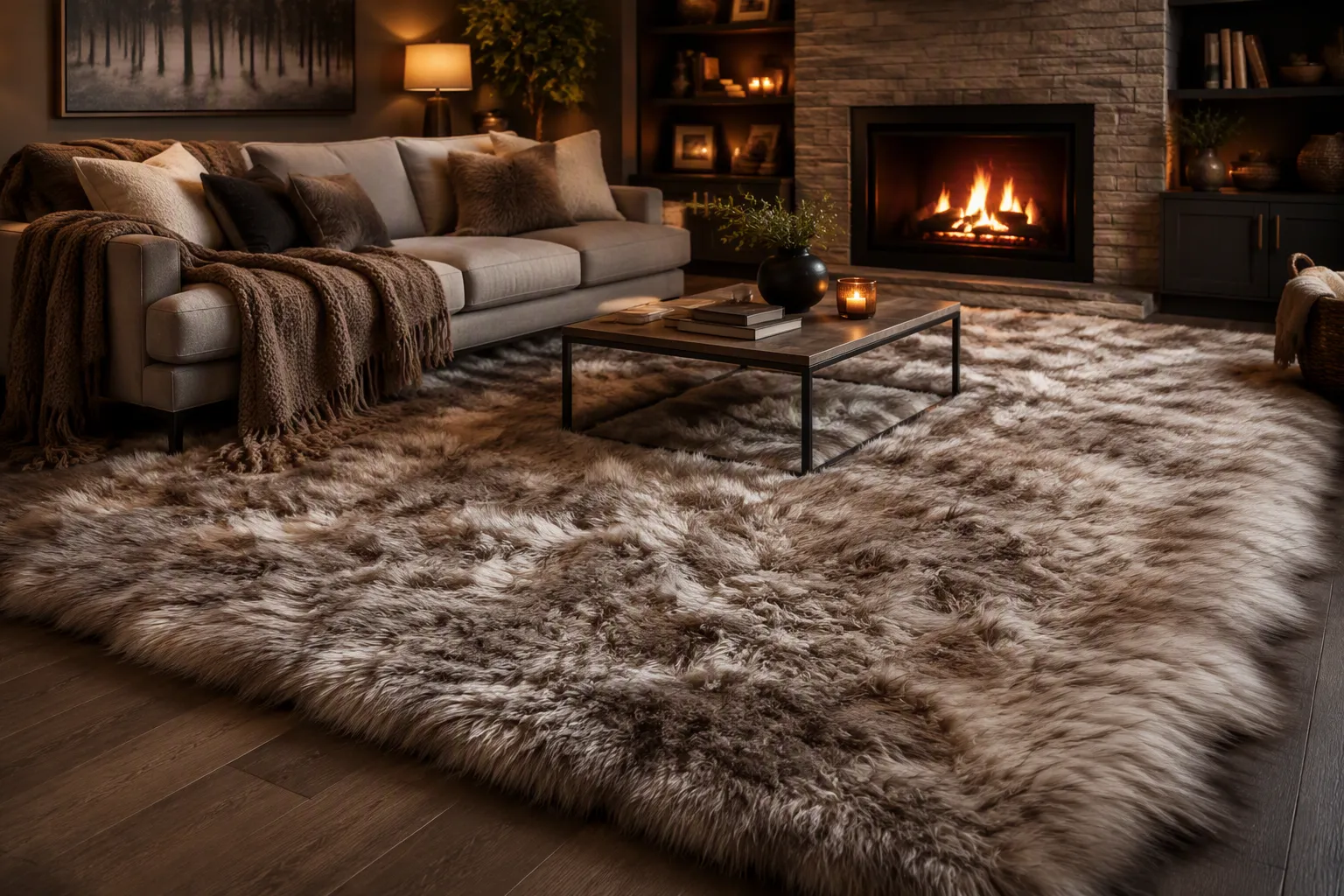
You finally bought a beautiful faux fur rug, but it looks like a tiny postage stamp in your large room. Or it overwhelms your small space entirely. How do you choose the right size for your home? The answer comes from simple, measurable rules for rug sizing. These simple guidelines prevent common mistakes.
A cozy atmosphere starts with the right rug. When choosing a living room rug, consider your furniture placement. A soft, cozy rug can transform your home decor. This guide helps you measure and visualize the perfect fit. You will learn to select fur rugs and mats with confidence. Boost your home decor with proper sizing. Faux fur offers comfort and style. Avoid decor mistakes with these practical tips.
Key Takeaways
Use the 6-8 inch rule to size your rug. Your rug should extend 6 to 8 inches beyond your sofa on each side.
Leave 18 inches of bare floor between your rug and the walls. This frames your rug and makes the room feel larger.
Mark your rug's footprint with painter's tape before buying. This helps you visualize the size and avoid mistakes.
Choose a rug size based on your room. For living rooms, 8x10 or 9x12 feet work best. For dining rooms, add 24 inches to the table size on all sides.
Use a rug pad to keep your rug in place and protect your floor. This also adds safety and comfort.
Key Rules for Fur Rugs and Mats
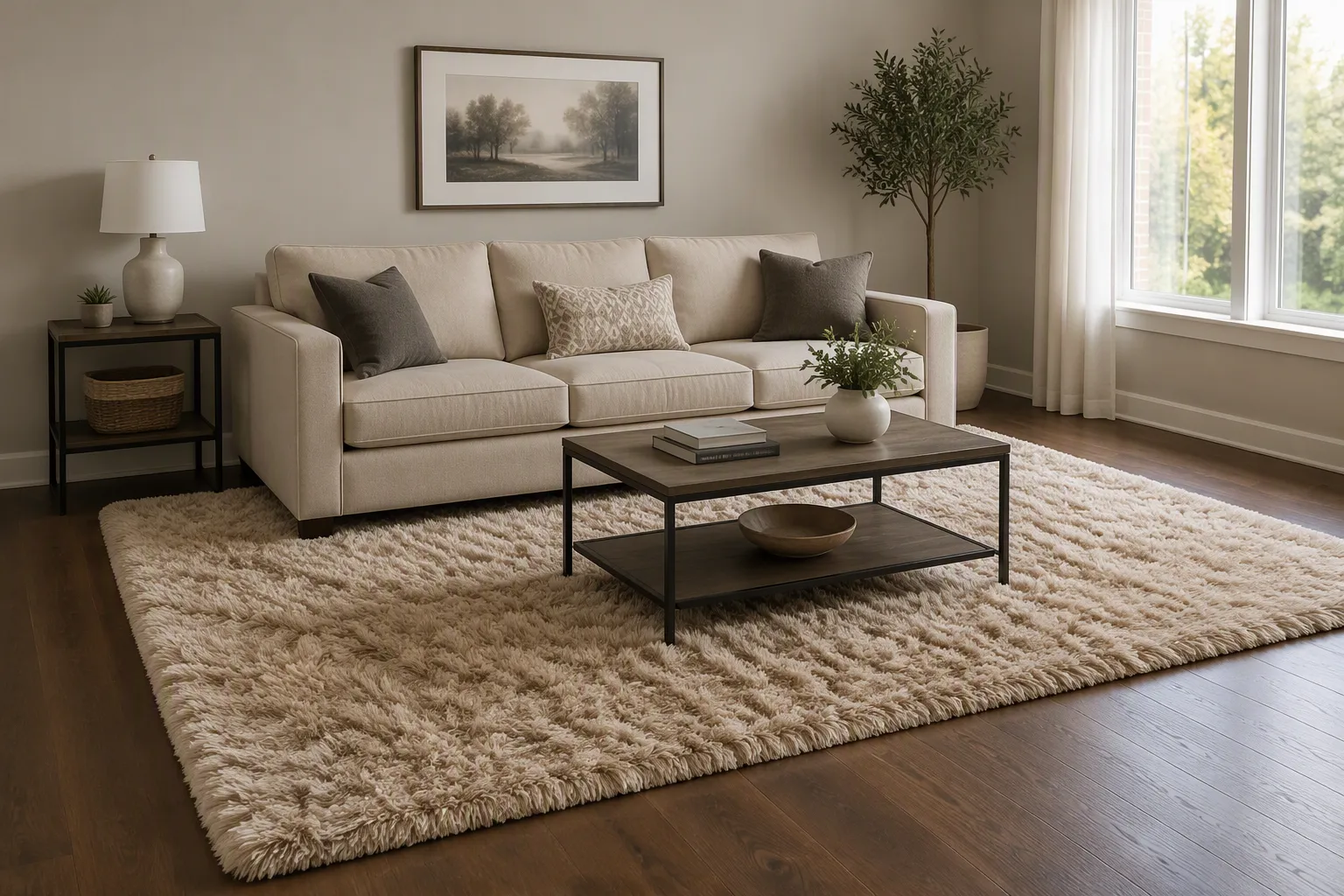
Before you shop for fur rugs and mats, you need two simple measurements. These rules come from professional interior designers. They work for any room in your home. Master these guidelines first. Then you can apply them to every space.
The 6-8 Inch Rule and Furniture Anchoring
The 6-8 inch rule defines how far your rug must extend beyond your sofa. Your rug should sit at least 6 inches wider than your sofa on each side. An 8-inch extension works even better. This margin creates a balanced frame around your furniture. It prevents that awkward postage-stamp look.
Your furniture placement on the rug matters just as much. You have two main options. The first option places all furniture legs on the rug. This classic approach creates a unified look. The second option places only the front legs on the rug. This modern style works well in smaller rooms. Choose one method and stay consistent. Mixing the two looks messy.
Professional designers follow a clear table of standards for rug placement. This table shows the relationship between your furniture and your rug.
Rule Category | Specific Guideline |
|---|---|
Furniture Placement | All furniture legs on the rug for a classic, unified look; alternatively, only front legs on the rug for a more modern feel. |
Rug Size (Living Room) | Standard sizes are 8'x10' or 9'x12'; 6'x9' for smaller rooms; 5'x8' only for layering, not as a main rug. |
Rug Width vs. Sofa | Rug must be at least 8-10 inches wider than the sofa on both sides; extend to 16 inches if side tables are present. |
Coffee Table Proportion | Coffee table width should be 2/5 to 3/5 of the rug width. |
Additional Seating | Increase rug size (e.g., from 8'x10' to 9'x12') when adding lounge chairs or a loveseat. |
General Principle | When in doubt, choose a larger rug; leave at least 24 inches of walking space between furniture pieces. |
This table gives you concrete numbers. Use it as your shopping checklist. A faux fur rug that follows these proportions will anchor your seating area properly.
Proper anchoring does more than look good. It creates psychological benefits for your space.
Visual unification: A rug that extends under the front legs of all seating pieces visually unites the furniture grouping, creating a defined and cohesive zone.
Psychological intimacy: The same technique fosters a sense of intimacy and cohesion, making the seating area feel more inviting and connected.
Visual grounding: Darker rug colors ground the space, anchor the furniture arrangement, and create a sense of stability, which enhances the perceived cohesion of the room.
Visual harmony: Proper placement of the rug defines functional zones and contributes to overall visual harmony, reinforcing the room's cohesive design.
These effects make your room feel intentional. Your faux fur rug becomes the foundation of your home decor.
The 18-Inch Floor Margin Rule
The 18-inch rule controls the space between your rug and your walls. You should leave bare floor visible around your rug's edges. This margin frames your rug like matting around a piece of art.
Design experts offer slightly different ranges for this margin. One design article from Carolina Furniture recommends leaving an even margin of roughly 8 to 18 inches between the rug and the wall. A rug placement guide from Kirishian Rugs suggests 16 to 30 inches of exposed flooring in living rooms. Both ranges create a pleasing frame of hard surface around your rug. The exact number depends on your room size.
This margin prevents your rug from looking like wall-to-wall carpet. It gives your floor a chance to breathe. It also makes your room feel larger. A faux fur rug with proper margins defines the seating zone without overwhelming the space.
Use painter's tape to map your rug's footprint before you purchase. Measure your room. Mark the rug's edges with tape on your floor. Step back and evaluate the proportions. This simple trick saves you from expensive mistakes. You can adjust the tape until the size feels right.
Remember that a rug pad adds safety and comfort. It keeps your rug in place. It also protects your floor from scratches. Choose a pad that matches your rug's dimensions.
These two rules work together. The 6-8 inch rule positions your rug relative to furniture. The 18-inch rule positions your rug relative to walls. Together they create balanced proportions. They make your faux fur rug look intentional rather than accidental. This versatility makes them essential knowledge for any decor project. A faux fur rug offers a versatile choice for every room. Its soft texture adds warmth and comfort. Follow these rules and your home decor will look professionally designed. The cozy result will transform your living space.
Sizing a Faux Fur Rug for the Living Room
The living room serves as the heart of your home. You need a piece that fits both your space and your daily life. A faux fur rug adds warmth and a cozy feel. Fur rugs and mats come in many sizes. But you must choose the right size to make it work. Explore the standard sizes and common mistakes below.
Standard Sizes and Sofa Alignment
The most versatile sizes for a living room are 8 feet by 10 feet and 9 feet by 12 feet. These dimensions work well with standard furniture arrangements. They give you enough coverage to anchor your seating area properly.
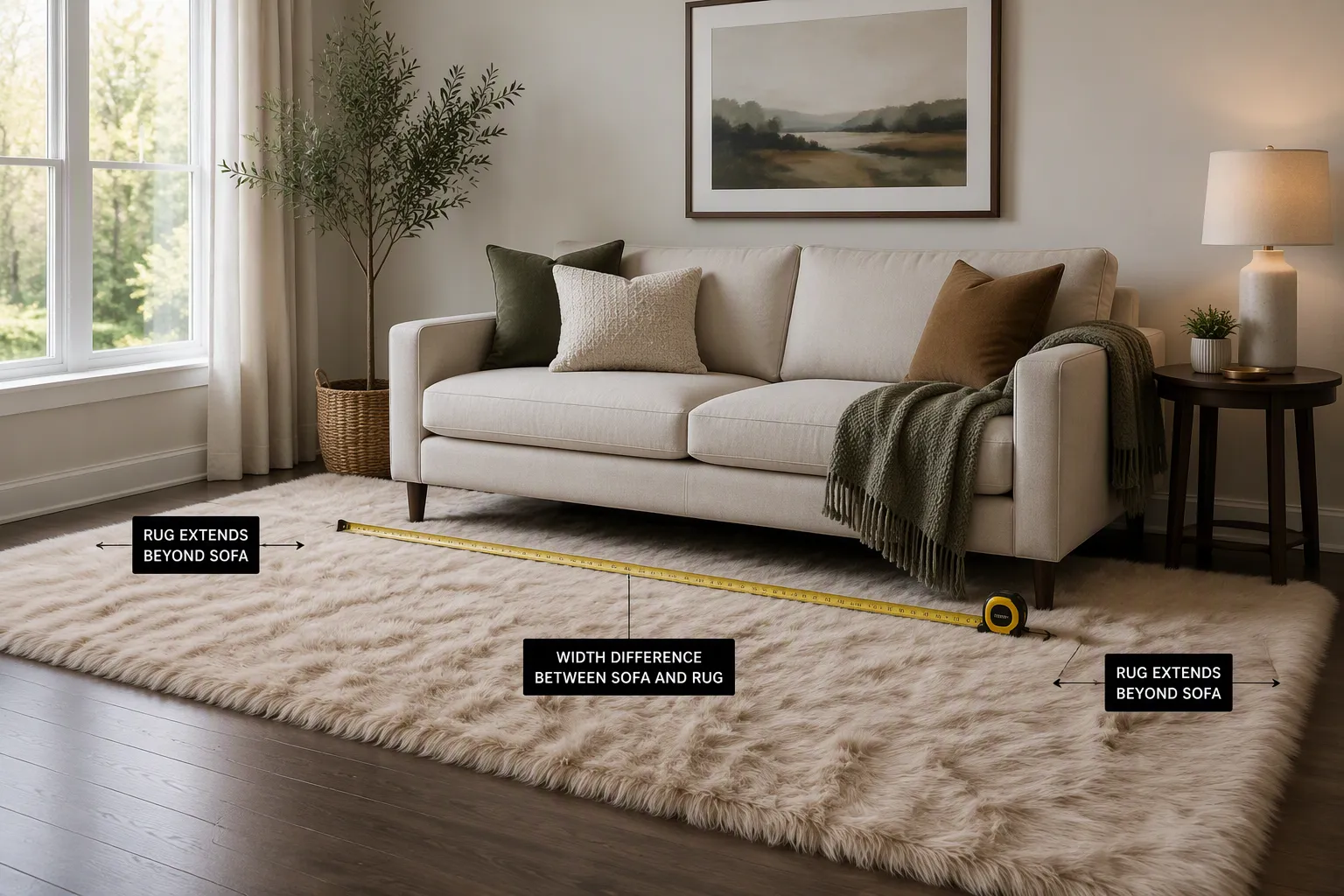
Your sofa determines the minimum width you need. A standard three-seat sofa measures 72 to 96 inches wide. The most common width is 84 inches. Your faux fur rug should be wider than the sofa by 6 to 12 inches on each side. This rule creates a balanced frame around your furniture. This home decor principle applies to any room.
Let's do the math. An 84-inch sofa plus 12 inches of extra width equals 96 inches. That is exactly 8 feet. This confirms why an 8-foot-wide piece works so well with a standard sofa. If you have side tables, extend the width further. Aim for 16 inches of extra space on each side.
For smaller living rooms, consider a 6-foot by 9-foot option as a main rug. A 5-foot by 8-foot option is only suitable for layering over a larger natural fiber base. Lighter colors make the room feel larger. A white or cream faux fur rug reflects light and opens up the space. This layering technique creates a cozy atmosphere.
The rug should be large enough that the front legs of the sofa and chairs sit on it. This usually means the piece is wider than the couch by 6 to 12 inches on each side. This placement anchors the furniture and creates a cohesive zone. Your home decor benefits from this intentional arrangement.
Common Living Room Mistakes to Avoid
Interior designers see the same mistakes again and again. The most common error involves buying a faux fur rug that is too small. A small piece forces your furniture closer together. The room feels unbalanced. You end up with wasted empty space around the edges. Kerrie Ann Jones explains that a piece which is too small can visually shrink the space. Your furniture feels like it is floating without a clear zone to anchor it.
A rug that is too large also causes problems. Gena Kirk, VP of Design at KB Home, warns that an oversized piece overwhelms the space. It makes the room appear smaller. You need to find the middle ground. Follow the 6 to 8 inch rule and the 18 inch floor margin rule from the previous section.
Another mistake involves pushing the rug entirely under the sofa. This wastes its visual impact. You lose the chance to define the seating area. Instead, position the piece so it extends beyond the front of the sofa. This creates a clear path for your feet when you sit down.
Ignoring traffic flow is a third common mistake. A piece that is too small can create a tripping hazard. It blocks natural pathways through the room. It also leads to uneven wear and tear. Proper placement leaves space around the edges. This guides foot traffic rather than hindering it. Your choices should enhance the room's function.
A 5x8 piece works well for layering over a larger neutral base. This technique adds texture and interest. It also protects the main piece from wear. Always use a rug pad underneath. This prevents slipping and extends the life of your decor.
Remember your lifestyle needs too. A cream shag piece may look beautiful. But it is impractical for homes with kids or pets. Choose stain-resistant materials for busy spaces. Check the care instructions before you buy. This prevents frustration later. Your home decor should match your daily life.
Sizing for Dining Rooms and Bedrooms
Dining Room: The Chair Pull-Out Test
Your dining room demands a different approach. The rug must accommodate the table and chairs even when someone pulls a chair back to stand. A general rule says you add 24 inches to the table's dimensions on all sides. This extra space lets chairs slide out without catching the rug's edge.
Consider your table's capacity. A table for 4–6 seats needs an 8'x10' rug. A table for 6–8 seats requires a 9'x12' option. For 8–10 seats, choose a 10'x14' piece. Round tables follow a similar logic. Add approximately 48 inches to the table's diameter. A 48-inch round table needs a roughly 96-inch round rug.
Allow at least 36 inches from the table edge to the rug edge for chair pull-out. Your rug must extend beyond this distance. Otherwise, chair legs catch the edge and create a tripping hazard.
Material matters in dining areas. Flatweave or low-pile rugs are preferred; avoid shag or thick pile for easier cleaning and chair movement. Your faux fur rug adds warmth, but choose a low-profile style for this busy space.
Bedroom: Bedside and Runner Options
Your bedroom rug anchors the bed as the focal point. Place the rug under the bed, extending out on all sides. The rug should extend at least 24 inches beyond the foot of the bed. This creates visual balance and a soft landing underfoot.
Bed size determines your dimensions. A full bed works with a 6'x9' rug. A queen bed suits an 8'x10' option. A king bed needs a 9'x12' rug to maintain balance. Center the rug with the bed for symmetry. This intentional placement defines the sleeping zone within your home decor.
Runners beside the bed offer another option. Each runner should be wide enough to step onto comfortably and extend the length of the bed. This creates a soft pathway for your feet each morning. The runner frames the sleeping area and adds warmth to the room. Your faux fur rug choices here can be plush and cozy since bedroom traffic stays light.
Measure your space and bed dimensions before purchasing. Account for furniture placement and traffic flow. A well-placed rug defines areas and guides movement. Your faux fur rug transforms the bedroom into a retreat. This decor choice adds comfort and style to your daily routine.
Sizing for Hallways and Entryways
Choosing the Right Runner Length and Width
Your hallway needs a runner that fits the space properly. The runner must be narrower than the hallway. Leave at least 3 inches of bare floor visible on each side. Choose a runner width that leaves at least 3 inches of floor on each side of the hallway.
The length of the runner matters just as much. Leave some space between the runner ends and the walls or doors to create a balanced look. The runner should cover most of the hallway length. Ideally, it extends from one room entrance to another. Avoid splitting the runner in doorways. A longer runner that spans the majority of the hallway always looks better than a short one. A faux fur rug can add a cozy warmth to this space.
Avoiding the 'Floating Carpet' Look
A runner that floats in the middle of the hallway looks unfinished. Anchor it properly. Use a high-quality rug pad to prevent slipping and reduce wear. This keeps the runner flat and safe. The rug pad also protects your floor from scratches.
The color and pattern of the runner affect the overall look. Choose subtle geometric designs or repeating motifs that guide movement forward. Longitudinal patterns reinforce the natural direction of the hallway. Lighter tones open up the space. Darker runners add grounding. Muted palettes transition seamlessly between rooms. This decor choice ties the hallway to adjacent rooms.
In entryways, material choice matters for durability. You need a rug that handles high traffic. Choose stain-resistant or easy-to-clean materials for busy spaces. A faux fur rug can work in a low-traffic entryway. Choose carefully.
Coordinate the runner colors with adjacent rooms for visual flow. Use the runner to highlight architectural features. Let the runner be the primary decorative element. This approach creates a cohesive look. It ties your home decor together. The right runner transforms your hallway into a design statement. Your home decor benefits from this intentional approach.
Choosing the right faux fur rug size is about getting the right proportion, function, and style. You now have the tools to measure the right way. Use the 6-8 inch rule to anchor your furniture. Use the 18-inch floor margin rule to leave space from walls. Always measure your room and furniture before you shop.
Use painter's tape to mark where your rug will go on the floor. Step back and look at the size. Move the tape until the size looks good. This simple trick stops you from making costly errors.
A rug that is the right size makes a room feel cozy. It holds your furniture in place and sets the area. Your home decor will look planned and neat. This faux fur design adds warmth without a long-term promise. You can now change your living space with confidence. Your choices will show that you thought carefully about the design.
FAQ
How do I measure my room for a new rug?
Measure the length and width of your seating area. Add about 8 to 18 inches of bare floor margin on each side, depending on your room size. Mark the space with painter's tape. Step back and evaluate the proportions. This method works for any room in your home.
Can I use a faux fur rug in a high-traffic hallway?
Yes, you can. Choose a low-profile style with a dense pile. A flatweave faux option resists crushing and cleans easily. Place a quality rug pad underneath. This protects the rug and your floor. Your hallway stays cozy without sacrificing durability.
What size rug works best for a small apartment living room?
A 6x9 foot rug fits compact spaces well as a main rug. A 5x8 foot rug is only suitable for layering. Position it so the front legs of your sofa rest on the edge of the rug. Choose a light color to open up the room. This decor choice adds warmth without overwhelming your floor space.
Should I match my rug color to my furniture or walls?
Match your rug to your furniture for a unified look. Contrast with your walls for visual interest. Consider your existing home decor palette. A neutral faux fur rug complements most styles. Your personal preference guides this decision.
How do I keep my rug from sliding on hardwood floors?
Use a non-slip rug pad designed for hard surfaces. Cut the pad slightly smaller than your rug. This keeps edges flat and prevents trips. The pad also adds cushioning underfoot. Your rug stays secure and your floor stays protected.
See Also
Selecting the Perfect Faux Cowhide for Your Living Space
Picking the Ideal Faux Wolf Fur and Plush Textiles for Your Craft
Five Tips for Choosing Distinctive Long Pile Faux Raccoon Fur
